
NEWS
〰️
NEWS 〰️
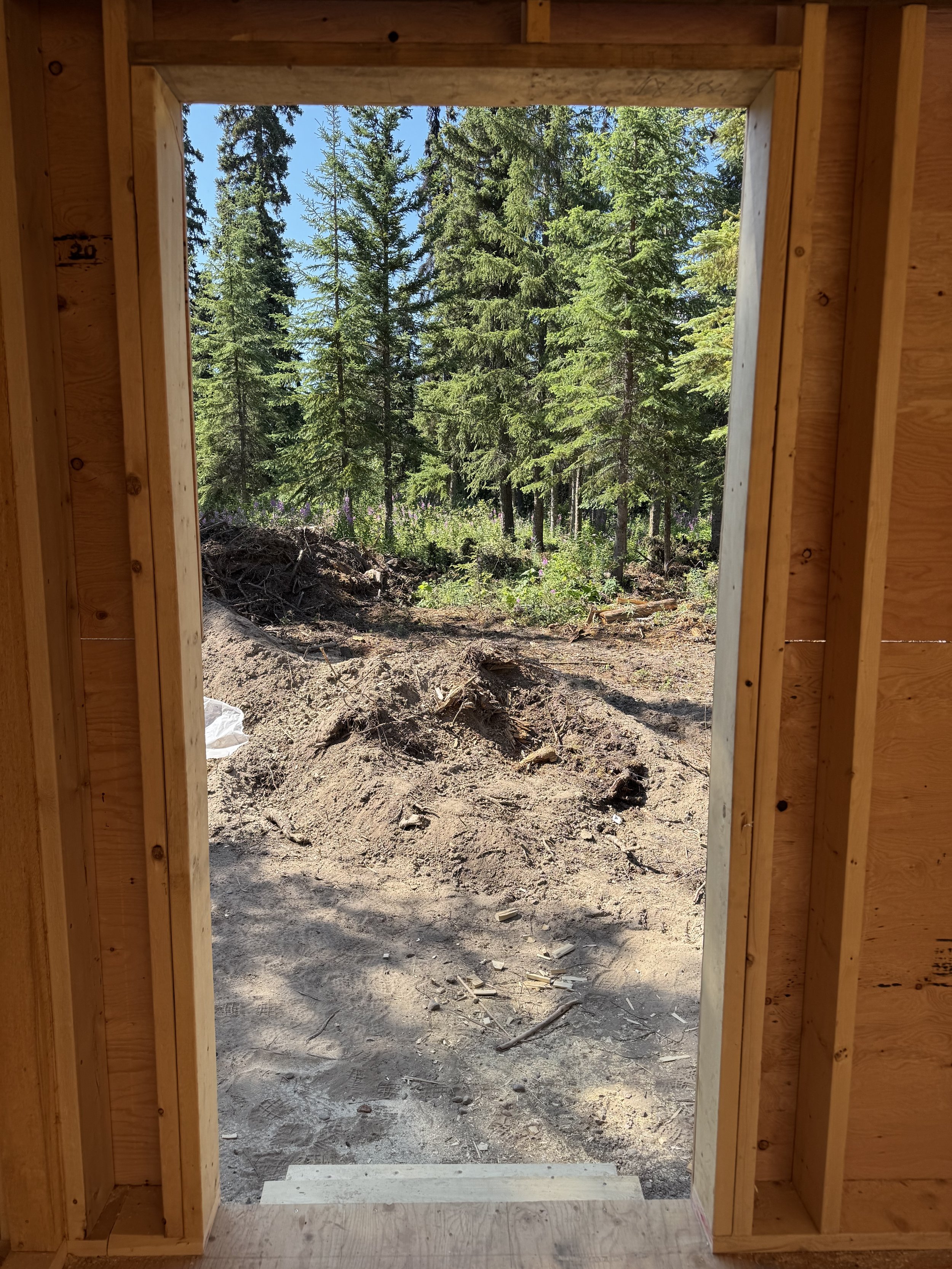
Caretaker Cabin Update
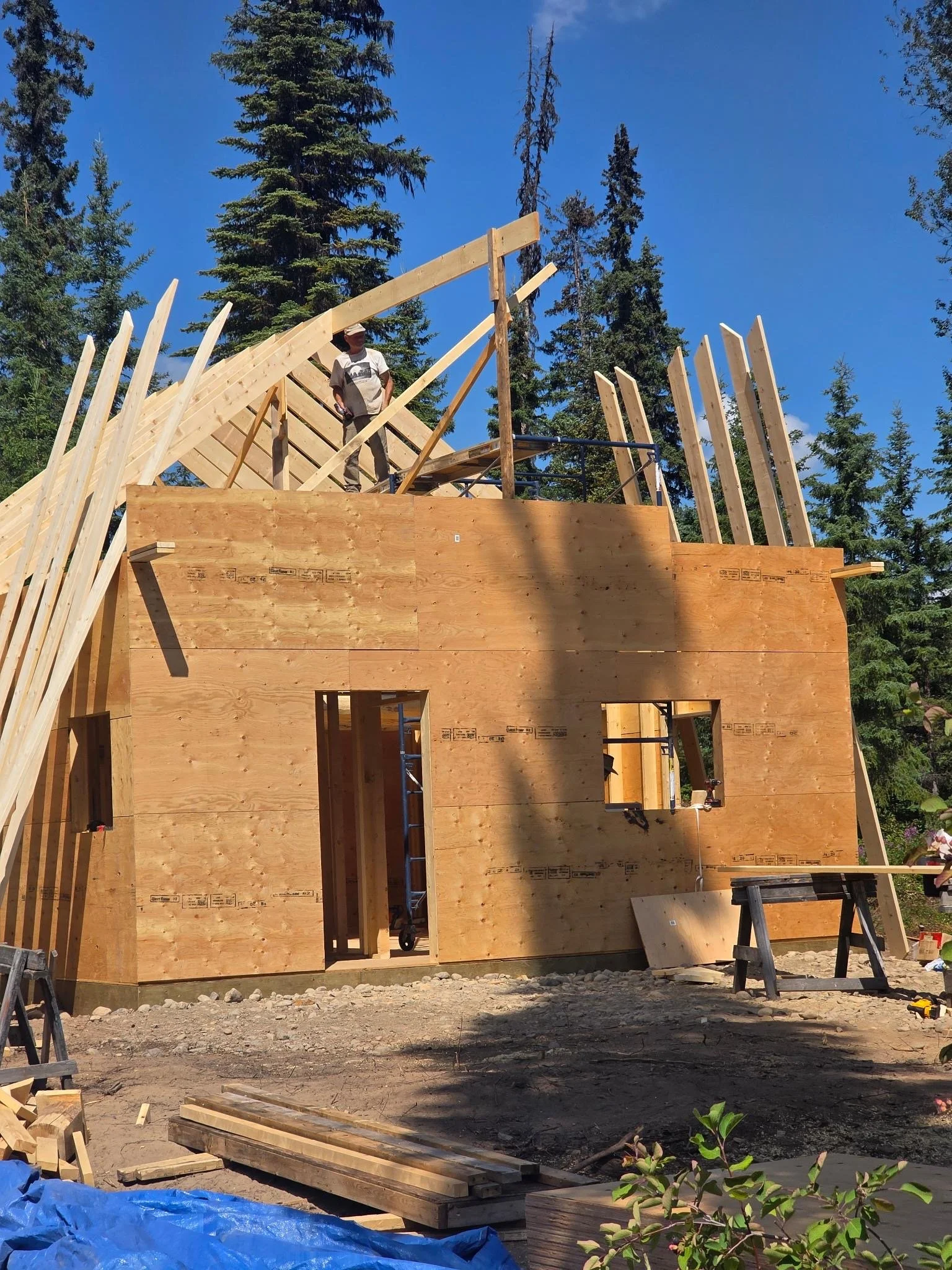
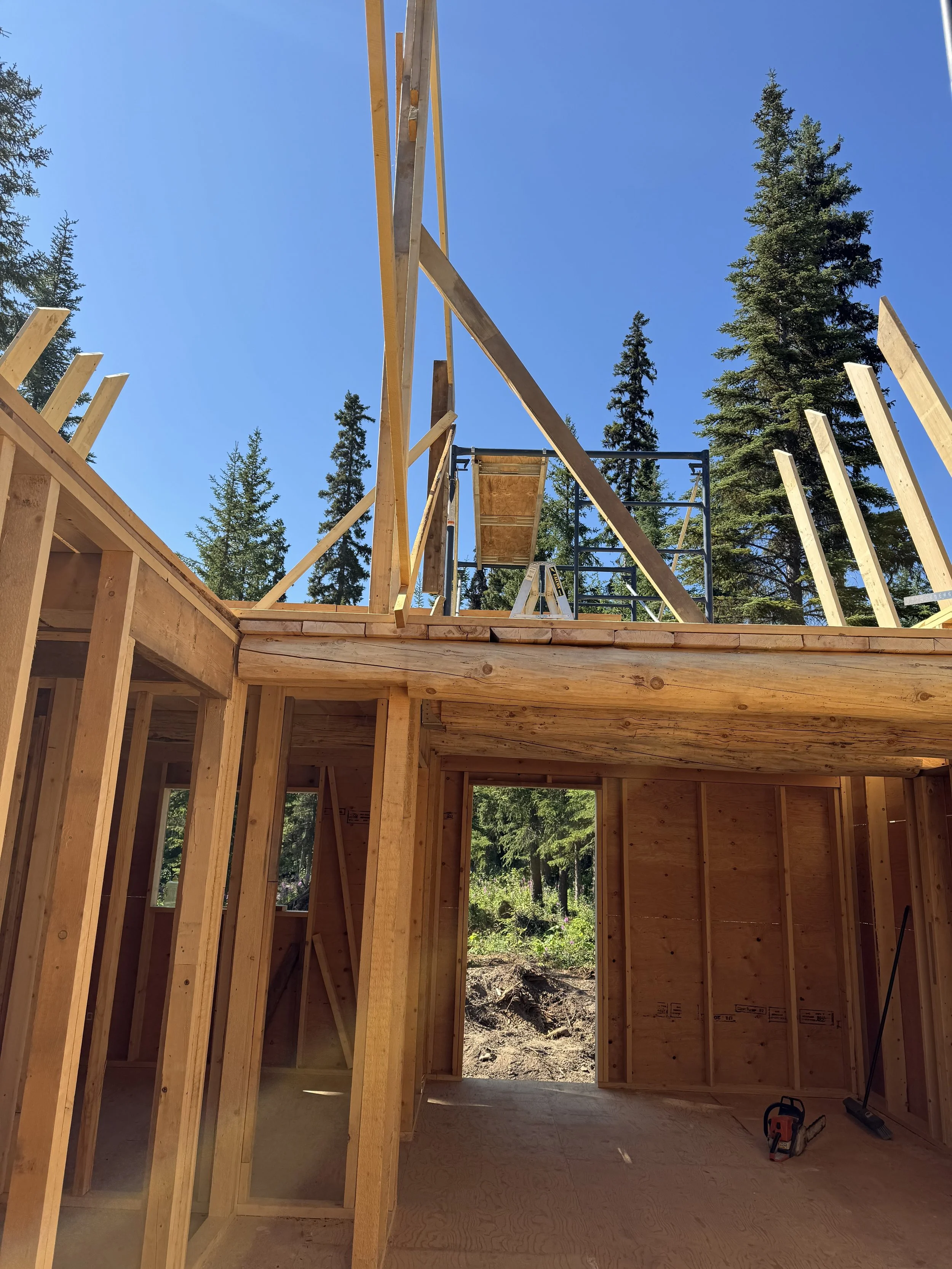
Check out the progress on our new caretaker cabin at Ts’elkiy’ kwah! Tabï misiyh to the volunteers that got this going and worked so hard in the heat don’t worry the got to dip in Wedzin kwah to cool off!
We are still looking for more volunteers to finish the roof, windows and doors etc. We have a couple of applications in the cue for later on this summer and there are still other projects planned.
We are looking for:
• skilled carpenters/labourers
• cooks
• general labour/helpers
And folks with bush skills
If you want to come enjoy the yintah, make new friends, and swim in Wedzin kwah while doing land back then apply to come to camp!
Misiyh! And stay hydrated out there.
Please complete the come to camp form below and join us!
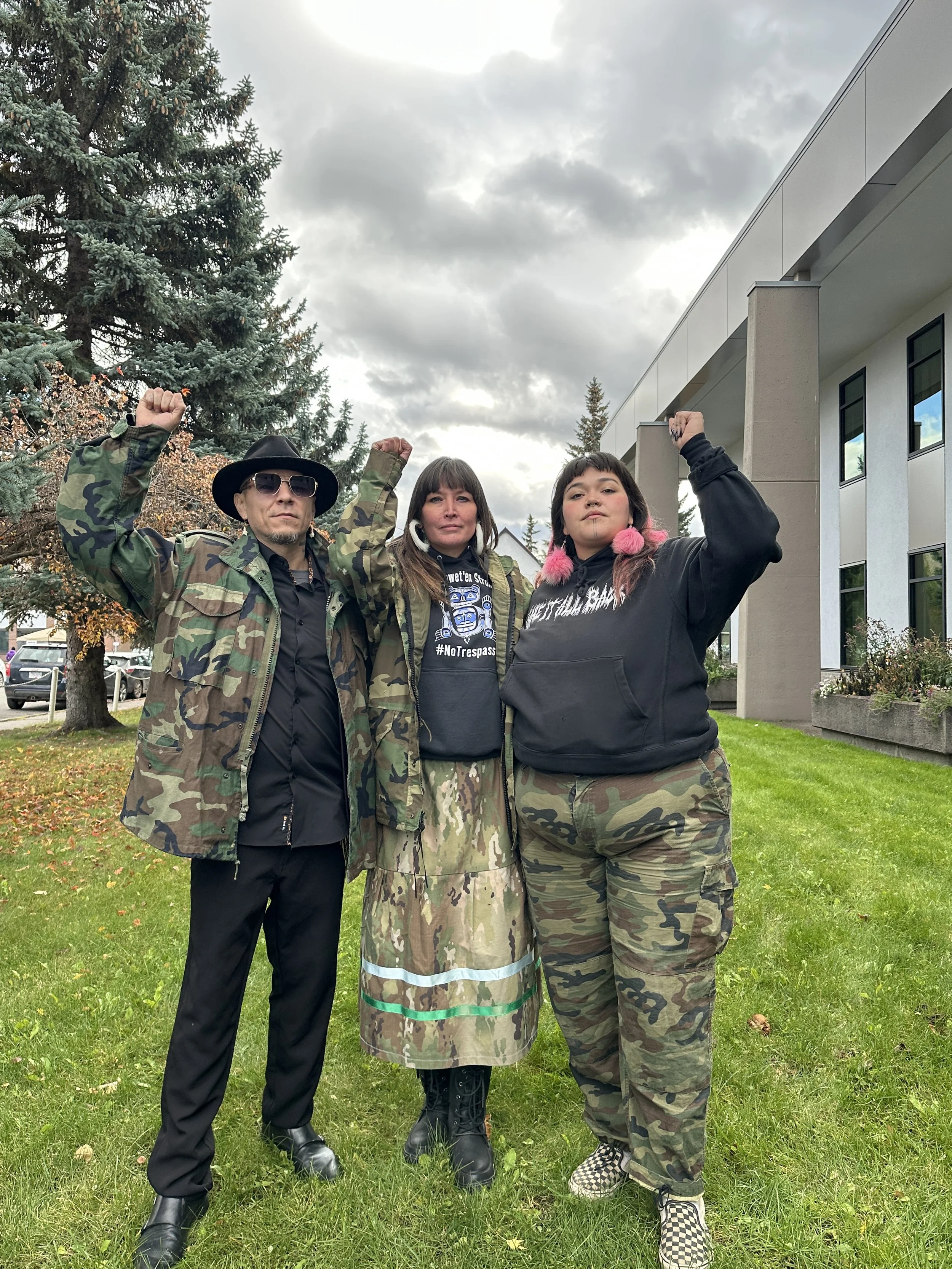
“No matter what they said, no matter what they did, they couldn’t touch us because we’re standing on what our ancestors fought and died for.” -Sleydo’
“Since the beginning I feel like we’ve always known that justice wouldn’t flow from these halls. Justice comes from being on our land, and occupying our territory, and living and breathing life into our cultures.” -Shaylynn Sampson
“I did this for the Haudenosaunee ancestors, for all the ancestors throughout Turtle Island, that have fought and bled and died for us to be here. That’s why I’m here.” -Corey Jocko
Land defenders of the Yintah, Sleydo’ Molly Wickham (Cas Yikh, Wet’suwet’en wing chief), Shaylynn Sampson (Gitxsan), and Corey Jocko (Mohawk/Haudenosaunee) were given a suspended sentence by the Supreme Court of BC Justice Michael Tammen on October 17th, 2025.
The land defenders were given a suspended sentence for their conviction of criminal contempt (January 12, 2024) in relation to the breach of an injunction and their arrests on November 19, 2021. The decision comes after the now decades long battle of the Wet’suwet’en hereditary chiefs to maintain control and jurisdiction over their 22,000km2 traditional territories and prevent oil and gas pipelines from harming critical habitats, waterways, and Wet’suwet’en traditional ways of being.
Justice Tammen sentenced Sleydo’ to 30 days, Corey Jocko to 25 days, and Shaylynn Sampson to 20 days imprisonment. He reduced their sentences by 3 days each due to breaches of their charter protected rights by the RCMP during their arrests; mainly for the failure of the RCMP to obtain a warrant for the breaches of the tiny house and cabin, a section 8 and 9 breach, as determined by the Abuse of Process claim decided by Justice Tammen on February 18, 2025. Tammen considered the section 7 breach, in the residual category, and their transportation and conditions of their imprisonment in November 2021 to increase the credit of their time served to 2:1. The section 7 breach was found for the “grossly offensive, racist, and dehumanizing” comments made by the RCMP regarding the red handprints Sleydo’ and Shaylynn wore covering their mouths to represent the Missing and Murdered Indigenous Women and Girls and Two Spirit people in the overall. The red hand prints draw attention to the rates that violence against Indigenous women increase when extractive industry builds ‘man camps’ in an area. Tammen described their transport as the “harshest possible conditions of confinement in a series of holding cells at RCMP detachments with hours of arduous transport in vans, irregular meals and no amenities of any sort”. For these reasons Tammen further reduced their sentences by 10 days for Sleydo’ and 8 days for Shaylynn and Corey. Tammen also considered their personal histories as laid out in their detailed Gladue reports, which out of respect for their privacy did not read out in court. Their net sentences are 17,12, and 9 days respectively.
Justice Tammen distinguished criminal contempt as being part of common law, not the criminal code and so did not feel constrained by the rules of sentencing as it would be under the criminal code. He noted that in order to preserve the respect for the courts it is appropriate to extend “judicial clemency, in part based on the need to foster reconciliation with indigenous peoples.” He suspended their imprisonment in its entirety for one year due to the unique nature of the case including the extensive history of colonization, the failure of the federal and provincial governments in reaching a rights and title agreement with the Wet’suwet’en hereditary chiefs and the backdrop of the hereditary chiefs being the authority, as the plaintiffs in Delgamuukw courtcase, which proved they never lost rights and title to their lands. Land defenders will be expected to be in good behaviour during the 1 year suspended sentence and complete 150 hours of community service supporting an Indigenous youth empowerment project.
The Wet’suwet’en are disappointed that the 8 year legal and land-based battle with Coastal GasLink to have their rights and title recognized resulted in both the pipeline being constructed through Wet’suwet’en yintah without the consent of the proper rights and title holders and the criminalization of their hereditary chiefs and land-defenders. So, it is a bittersweet moment to finally hear their rights and title being recognized as important factors in the dispute in Justice Tammen’s reasons for decision.
Throughout the years, Crown prosecutors argued that Wet’suwet’en title and rights played little to no factor in the injunction proceedings. Justice Tammen disagreed with the Crown counsel and provided an extensive reason for decision which included the recognition of the Wet’suwet’en’s rights and title, proving in the Delgamuuk’w Gisdayway decision December 11, 1997, and the 2020 Memorandum of Understanding made between the federal, provincial, and Wet’suwet’en governing bodies that affirmed Wet’suwet’en rights and title and clearly recognizing the hereditary chiefs of the individual Wet’suwet’en houses as the rightful title holders. Tammen further stated that following the 2020 signing of the MOU “and subsequent failure to meaningfully implement it on the part of both the federal and provincial governments as part of the backdrop to the offending behaviour”. Tammen noted that the Wet’suwet’en felt they were not properly consulted or involved in decision making in the Coastal GasLink project.
Justice Tammen’s decision was brought forward in front of an overflowing courthouse that included Wet’suwet’en and Gitxsan hereditary chiefs, clan and house members, some of whom were present and gave testimony during the Delgamuuk’w decision. Many were emotional during Justice Tammen’s reading of his decision as he made a clear and stated effort to rebuild the trust of the Wet’suwet’en and Gitxsan peoples and “take tangible steps to restore respect for the justice system” and agreed with Defense Counsel Frances Mahon that,
“this history must be taken into account in the sentence matrix. This is an integral component of why they have come before the court. Colonization created the problem the Wet’suwet’en nation faces to this day in its constant struggle to have the Canadian government affirm their title in a meaningful and lasting way, those are the constrained circumstances that inform the action of the three offenders. Their moral blameworthiness must be assessed in this context.”
We are grateful that our land defenders did not go back to prison. Tammen’s decision demonstrated how much he had learned over the past few years about ‘Anuk Niwhit’en (Wet’suwet’en law) and the history of colonization. He stated that it was his duty to “advance the goal of reconciliation with Indigenous peoples even infinitesimally” given his knowledge of our history and the over representation of Indigenous people in the prison system. As part of an effort to reduce the number of Indigenous people incarcerated, the implementation of Gladue reports started in 1996. The reports include the history of an Indigenous person related to colonization and how it has impacted the person’s life. Since 1996 the rate of Indigenous people has actually increased. The process of going through one's entire life of trauma related to colonization is horrific and can be re-traumatizing to the person. The Crown brought in Monique Dull, from Indigenous Legal Relations at the Ministry of the Attorney General, to argue against considering the reports of Sleydo’, Corey and Shaylynn on the basis that they are living successful lives and so implying that the effects of colonization did not affect them. Despite her arguments, Tammen stated he was “mindful of the fact that the dark shadow of the legacy of colonization looms large in the broader backdrop to this case. The territory on which these offenses occurred is part of the unceded Wet’suwet’en lands, or yintah, over which the Wet’suwet’en sought a declaration of aboriginal title in the case of Delgamuukw and Gisday’wa in British Columbia.” The strong and historical testimonies over the past few years have educated not only Justice Tammen but all those paying attention and listening to the proceedings. With great effort, patience and personal sacrifice, Sleydo', Corey and Shaylynn stood strong in their truth for the world to hear
Throughout the nearly two years of trials we heard many testimonies, from Crown witnesses, of how the Critical Response Unit (CRU-BC), formerly the Community Industry Response Group (CIRG) a specially formed arm of the RCMP to deal with opposition to extractive industry, were instructed to not take any notes during arrests, debates over how much force to use, the reason for using less force than they wanted was “for optical reasons”, and the widespread racism among RCMP members, as well as the lack of foresight in their planning in transport and detention. Our Dinï ze’, Tsakö ze’ and community members, including house group members, family and supporters listened to audio recordings and testimony of these actions further traumatizing listeners in the courtroom and online. The testimonies of Sleydo’, Corey and Shaylynn further demonstrated how being criminalized, dehumanized, and further harassed after their arrests affected them personally in their daily lives. The treatment they experienced during their arrests, detention and while on the stand will require healing while also demonstrating the resilience the Crown specialist tried to use against them. As all Indigenous people know the legacy of colonization is intergenerational and these three have proven strength and care for the generations yet to come.
In upholding ‘anuk niwh it’en we hold close our allies and the relationships we have maintained for generations and present day alliances formed over years. We are forever grateful for all the different nations that have stood with us over the years and hold especially close our Gitxsan and Haudenosaunee relatives. By standing strong beside Sleydo’, Shaylynn and Corey have elevated and strengthened these bonds showing that we are never alone. This decision was precedent setting. Tammen stated at the beginning of these proceedings that there has never been a case with these specific factors set before the court. We know we did everything we needed to and that this is an intergenerational battle. We know this system was not made for us. And yet this is one less fight our grandchildren will have to endure.
*Since the decision we have taken some time to process the extent of the decision and continue to do so while starting the process of healing from all that has happened over the years. Misiyh for your patience in this reflection and know it is not a complete summary*
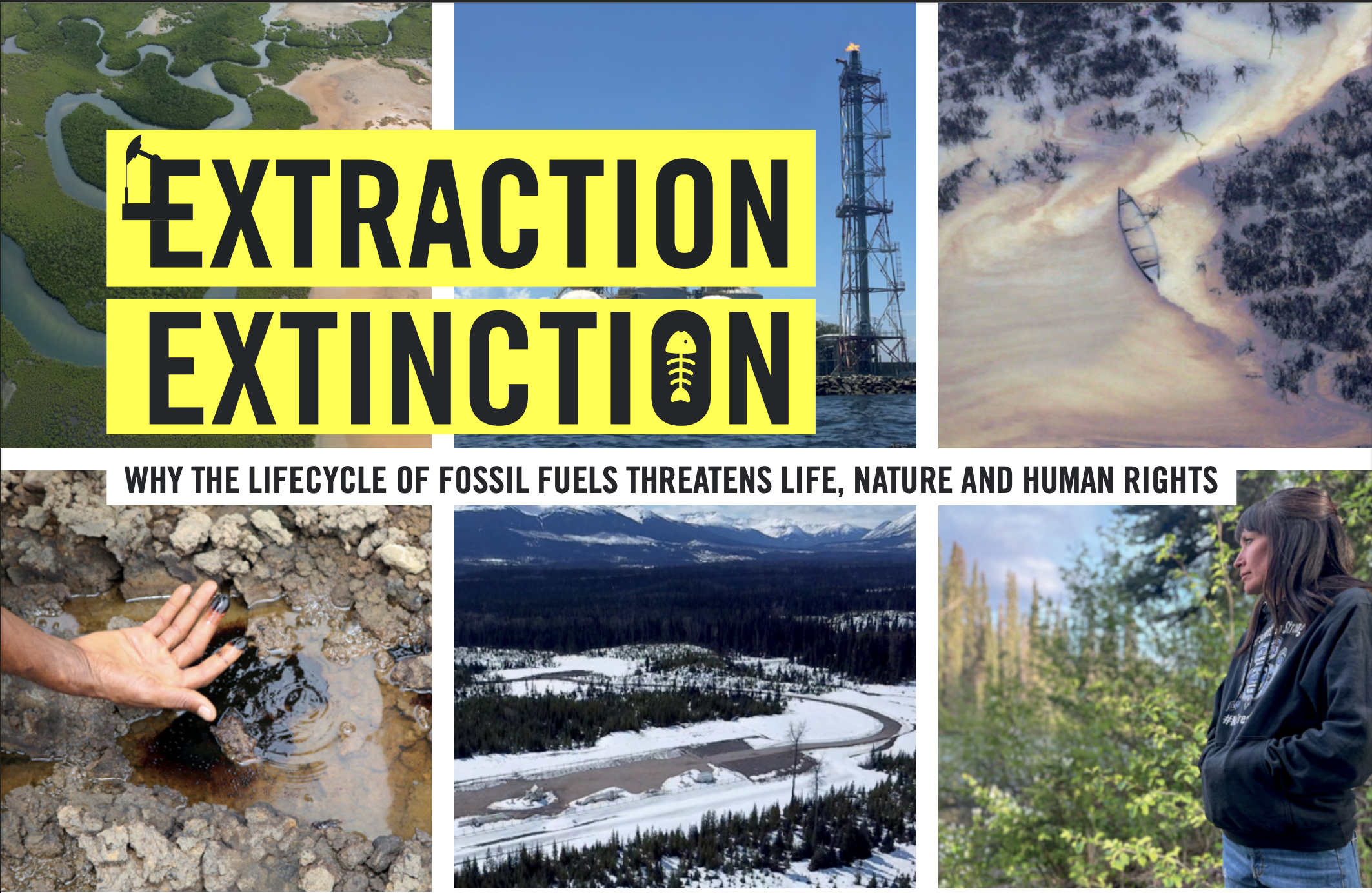
Climate change is an unprecedented global human rights emergency, caused primarily by burning fossil fuels that emit greenhouse gases. Global concentrations of these heat-trapping gases have reached record levels. Despite commitments made under climate agreements to urgently phase out fossil fuels, government actions to limit them and stem the flow of subsidies to the fossil fuel industry have been wholly inadequate.
This report maps the global scale of risks to human rights and critical ecosystems from existing and planned fossil fuel infrastructure. Data analysis by Better Planet Laboratory is presented alongside new, in-depth research and snapshots of ongoing campaigns across the Americas and West Africa, showing the devastating effects of fossil fuel exploration, production, transportation and decommissioning on fenceline communities and the ecosystems on which we all rely.
Decision for abuse of process application
On February 18th, 2025 Justice Michael Tammen read his decision on the application brought by Sleydo’, Shaylynn Sampson and Corey Jocko against the RCMP/CIRG after over a year in the colonial courts.
Tammen ruled that the RCMP/CIRG did breach our Charter Rights and abused the process of the courts. We had filed eight counts and while Tammen only legally confirmed two of the Charter Rights in his decision, one of them being he found that the racist comments about the handprints were "grossly offensive, racist, and dehumanizing" and undermine the integrity of the judicial process. This is a win. Although Tammen found that the warrantless entry into the tiny house and cabin breached the defendants' section 8 and section 9 rights, he found that the breach was minor because the arrests were "authorized and inevitable". He found that the removal and destruction of Sleydo's and Shay's cultural items caused great emotional distress but did not breach their section 15 rights but he would take the trauma they endured as result of this into account when he considers sentencing. We have asked for an alternate remedy of time served.
So while there are clear Charter violations we will still be proceeding to sentencing. We are disappointed that we are still being criminalized for upholding ‘anuk niwh’iten. However, as Sleydo’ states:
“The colonial courts are not where our ability to live out our laws and ways of life should be determined. And yet here we are, over 3 years later, in a show down between Wet’suwet’en law and colonial law after years of police violence and repression by the RCMP/CIRG with no accountability… We will never see justice from the courts for the amount of violence we have experienced over the last six years of repression by the state. This is just the tip of the iceberg of what Indigenous people have been experiencing and what we have experienced at the hands of the RCMP… My hope is that this decision will signal to the RCMP that they can no longer violate their own laws and act with impunity. Today I chose to celebrate the Yintah, for her resiliency throughout all the destruction and for continuing to provide for us and keeping us safe.”
We know that the RCMP have always been mandated to oppress and criminalize us. The state has always wanted secure access to our yintah since the Supreme Court of Canada decision in Delgamuukw-Gisdayway in 1997. Then they created the Community Industry Response Group (CIRG) in 2017 specifically to repress any land defence from extraction projects. They attempted to rebrand this as the Community Response Unit (CRU) after heavy criticism and a federal investigation in 2024. The corporate project of canada continues. We continue to uphold our responsibilities. As Corey states:
“We have seen this process in courts, out of courts, on the land, off reserve, we’ve seen in it books, documentaries, movies, every piece of knowledge that’s been carried and passed down through all these thousands of years these stories have been repeated. We’re in the position right now where we understood that, we know that and we did it for the right reasons so there is no reason to not feel proud of what we did. To stand here proud right now and to be relatives with the Wet’suwet’en, and to be Haudenosaunee out here it’s just an honour regardless of what they throw against us because we know we are doing it for the right reasons.”
We know we couldn’t have done this without all our allies and accomplices. There are so many beautiful relationships built in the last decade of protecting Wedzin Kwa and there is nothing that can be taken away from that. We know we are all stronger together. Our young Gitxsan relative has upheld an ancient alliance standing and fighting beside us, as well as many others. She reflects on the past fives years on the yintah:
“I believe in the fight for our territory and our land, in the celebration of the yintah and the lax’yip, and the unique relationship that our nations have […] We breathe life into our governance every day we are allowed to stand on our territory, and we bring our families there, that we can drink the water from Wedzin Kwa. I feel a lot of honour and am thankful for Sleydo’ and her family, for all of the hereditary chiefs of the Wet’suwet’en for all of their support and for my family that I have built here, that I was born with and that continues to support the work that we do […] We will see our land free and nourished again.”
We thank everyone for their support and statements of solidarity as we continue to fight for our sovereignty. S’necalyegh to everyone that has fought beside us with boots on the ground and feet in the street. We will always stand strong. We expect that it will be months before we see Judge Tammen again for sentencing. We will continue to walk in our ancestors footsteps. Awitza, misiyh.

📢 Community Call-Out from the Wet’suwet’en Divestment Team: Host a Screening of the documentary Yintah!
We’re excited to invite YOU to bring this powerful and inspirational documentary to your community however big or small! This film dives deep into over a decade long Wet’suwet’en resistance against the Coastal GasLink pipeline(CGL). Yintah is a must-see that sparks vital conversations and action!
On February 18th 2025, Sleydo’, Molly Wickham (Gidimt’en), Shaylynn Sampson (Gitxsan), Corey Jocko (Haudenosaunee) will hear colonial judge Tammen’s final decision in their Abuse of Process application against the RCMP/CIRG.
At the same time, Wet’suwet’en members and Hereditary Chiefs oppose and reject CGL's proposed phase 2, including the construction of massive compressor stations on the Yintah to double the pipeline’s capacity. Wet’suwet’en Land Defenders also stand in Solidarity with our neighbors from the Gitxsan nation, including the Gitanyow as they stand against Prince Rupert Gas Transmission project🔥To learn more from Land Defenders on the ground, join an upcoming webinar hosted by Change Course and Decolonial Solidarity February 24th 2025 7pm est/4pm pst. Link to register in the bio.
🎬 How to Get Involved:
Sign up to host a screening. We’ll help you with resources, including event materials and support.
Host a Screening: Gather your community, friends/family, or colleagues to watch and discuss the film together.
Raise Awareness: Share the message of the documentary and help amplify the voices of Indigenous communities.
Engage in Dialogue: After the screening, have an open conversation about the film's themes, lessons, and ways you can support Indigenous Land Defenders and their sovereignty.
Unite and stand in Solidarity with Indigenous Land Defenders and allies as they continue their fight.🌱 Yintah is more than just a film – it's an invitation to stand together and kick some colonial ass for Mother Earth and future generations.
🔗 find everything in our Toolkit!!


YINTAH
Our feature length documentary film won the prestigious Audience Award as voted by festival attendees at the Hot Docs 2024 Film Festival in Toronto! This award will ensure a further reach and opportunities for the distribution of Yintah.
This comes with a $50k cash award sponsored by Rogers.
We are so grateful for everyone that has seen the film, written about it, and shared!
Check out yintahfilm.com for updates!

Wedzin Kwa. This is what we are fighting to protect. Clean drinking water. Salmon spawning beds. Everything depends on her. Please consider joining us.
.
There are many different ways to support! You can take action where you are, support local issues that raise Indigenous sovereignty or donate. You can also come to the yintah where there are always projects and builds happening to reclaim and reoccupy our territory.
Ready to help?
TAKE ACTION
—
DONATE